
Wealthsimple's Credit Card Approvals Make Perfect Sense (If You Follow the Money)
Why lower-margin customers might actually be getting access to the coveted Visa Infinite card before everyone else
Another day, another complaint post on Reddit. Today’s one was about a brand-new Wealthsimple Premium client getting instantly approved for the 2% cashback Visa Infinite (VI) card, queue longstanding Generation clients commenting about still being stuck on the waitlist.
On the surface, it looks random, and that’s what’s frustrating people. They assume it’s about tenure with Wealthsimple, or total assets under management, or Premium vs. Generation tier status. When they meet all those criteria and still don’t get the credit card invite, they get upset. Approvals start to feel arbitrary.
But there’s a bigger variable that makes people uncomfortable to think about: how profitable you are as a customer. Nobody likes to think they’re the product, but when something is given away to you for “free”, that’s usually what’s happening.
How Wealthsimple Actually Makes Money
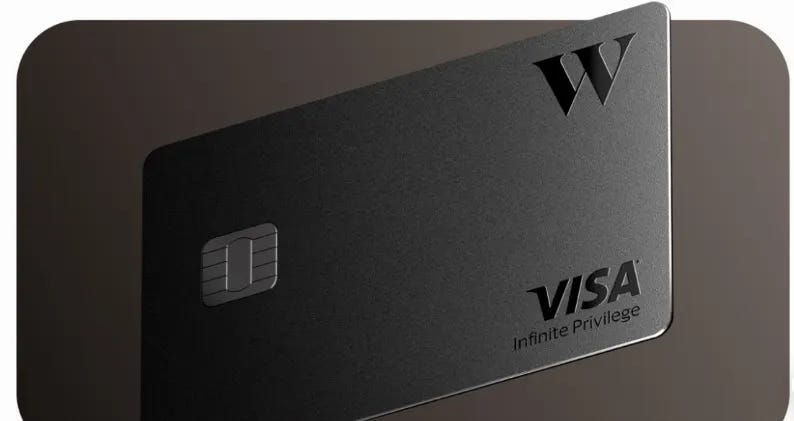
Every time you use a credit card, the merchant (seller) pays an interchange fee for using the credit card network to accept your (the buyer’s) payment. For Visa Infinite cards, that starts at around 1.7%, though it varies by merchant category and payment method. But here’s where it gets interesting: Wealthsimple has also launched the Visa Infinite Privilege (VIP) tier. It’s a premium credit card available to users who make $150k or more per year, so an even more exclusive audience than the Visa Infinite tier, and probably with a significant crossover audience of people who already had early access to the VI card.
Think about that for a second. They have tens of thousands of people on waitlists, many of them pissed and writing into customer support chats and on Reddit to complain, but they still chose to launch a new VIP product when they can’t even meet demand for the standard Visa Infinite. Why?
Because the unit economics are just that much better.
Lets run through the math. If you’re spending $5k per month on the standard Visa Infinite, that’s about $85 in monthly interchange revenue for Wealthsimple. With the VIP the interchange fees are closer to 2.45%- that’s 44% higher than the standard Visa Infinite rate.
With Visa Infinite Privilege fees starting at 2.45%, that same $5k in spending generates $122.50. That’s an extra $450 per year per customer- enough to offset several years of zero FX and generous (relative to other cards) cash back.
Wealthsimple provides a lot of genuinely no-fee services. No fees on Canadian ETF trades. No account fees for chequing. No minimum balances. They even announced $0 contract fees on options trading. All totally free, meaning they have to make money to pay their employees and their rent from somewhere.
Now think about all the traditional ways (pre-credit card) Wealthsimple monetized customers:
Interest rate spreads on cash balances in their chequing accounts
Management fees on portfolio products
Foreign exchange fees when you buy US-listed stocks or ETFs
Trading fees on their new Gold product, Crypto trading fees etc.
Tax filing product fees
Aside from interest rate spreads from having cash in the bank, monetization is highly dependant on people making a higher volume of stock trades (as seen by the new products they revealed at their For Nerds Only event catered at higher frequency traders) or using higher fee products. Credit cards are the perfect addition to diversify their revenue away from just trading related activity, and expanding into everyday spending.
Why Low-Monetization Customers Get Prioritized
If you’re a Premium or Generation client (meaning you have over $100k invested with Wealthsimple), you’ve probably been with them for a while. And if you’re savvy about minimizing fees, you’ve figured out how the system works. You’re the kind of person who uses Questrade for zero-commission stock trades, or is part of the “just buy XEQT” clan on Reddit. You’re buying Canadian-listed ETFs through Wealthsimple’s free brokerage program. You’re not incurring FX fees, and you’re not paying for managed portfolios.
Essentially, the only money Wealthsimple is making from you is the spread on whatever cash you’re parking in your chequing account.
Now, to be clear, these customers aren’t completely unprofitable. Wealthsimple does make money from the cash spread, but compared to customers who are paying management fees and racking up FX charges, these savvy, optimized customers are lower margin.
So if Wealthsimple can’t monetize you further through management fees or FX fees, what’s left? Credit card interchange fees.
What The Reddit Complaints Actually Tells Us
If we assume that Wealthsimple really is overwhelmed by demand for this card and can’t produce enough, or they have other constraints like risk management they need to balance (the reason why they don’t give the card to everyone given it prints money for them), the approval pattern we see on those Reddit complaint threads make a lot more sense.
Premium client with $150,000 invested, buying only Canadian ETFs, minimal cash balance? Approved immediately, possibly even getting the Visa Infinite Privilege upgrade. Wealthsimple is incentivized to maximize interchange revenue from this customer profile because they’re making basically nothing otherwise.
New Generation client who moved over all of their registered accounts, paying management fees on a robo-advisor portfolio and incurring FX fees buying US tech stocks every month? Waitlisted. Wealthsimple is already monetizing this customer with sticky products like managed portfolios where it’s harder to switch away and transfer to another financial institution. They’re lower priority to get the credit card since there’s neither a pressing need to create stickiness with the Wealthsimple ecosystem nor a low monetization profile.
Here’s what I find interesting: when people post on Reddit about getting approved or waitlisted, they always mention their Premium or Generation status, or how much money they have with Wealthsimple. But nobody talks about how they actually contribute to Wealthsimple’s bottom line through the products they do or don’t buy. That’s probably the bigger determinant.
And it’s not just the card approvals. Some customers are already getting Visa Infinite Privilege upgrades. Others are getting limit increase invites if they secure their credit limit by maintaining a minimum balance (equal to their new credit limit) in their TFSA or other accounts. All of this points to the same underlying logic: prioritize sticky profitability for low-monetization users who might be a flight risk (one transfer bonus promotion away from leaving Wealthsimple entirely).
Now, obviously there are other factors at play like credit risk, predicted spending behavior, how long you’ve been a customer. But if this hypothesis holds, monetization potential is the strongest explanation for the prioritization pattern we’re seeing.
The Broader Fintech Implication- No such thing as a free lunch, but still a win-win for most consumers
This is actually a pattern I’ve been noticing across fintech companies. When you build a product with no-fee features to acquire customers, those customers get smarter over time. They optimize their behavior to minimize costs. They figure out which brokerage has no fees for what sorts of trades. They avoid FX fees. They use only the free features.
The credit card becomes one of the last lines of defense for these companies to monetize.
Wealthsimple isn’t being random with their approvals, but it definitely feels like they’re being shrewd and strategic. They have high demand but a limited number of cards. They need a way to maximize revenue from customers who’ve optimized everything else, and interchange fees are a reliable, recurring revenue stream tied to everyday spending behaviour that’s much harder to game.
If you’re a Premium client sitting on a large portfolio and generating minimal fees, the credit card approval isn’t a reward for loyalty. For Wealthsimple it’s a way of finally making money from your account.
Which, when you think about it, is exactly what a rational business should be doing. There’s no such thing as a free lunch, but with credit cards it’s a close as you can get to a win-win for Wealthsimple and for customers- if you can get your hands on the thing.
Just a guy on the internet, all views are my own. These analysis and hypothesis are based on publicly available information and I’m not privy to Wealthsimple’s internal decision-making, just working backward from what I can see.